

Define the role, and let the platform find the gaps
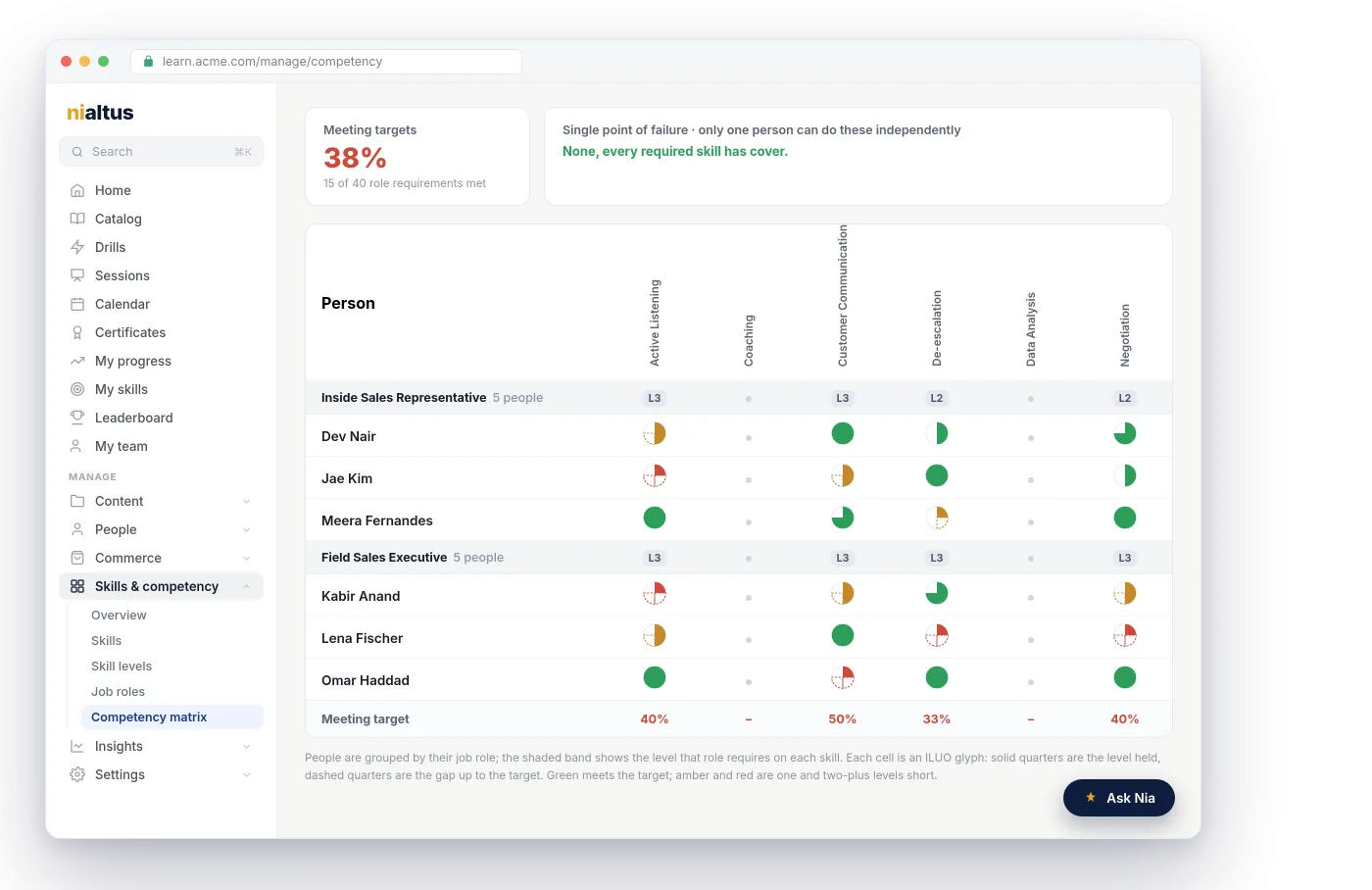
Describe the skills and levels a role actually needs, assign people to it, and the competency matrix does the rest, showing you who is ready, who is close, and where a role has no cover at all.
Three ways roles make training make sense
Stop guessing what a role needs, and start measuring against it.
Say what the role needs
For each job role, pick the skills and the level required on each. It becomes the yardstick everyone in that role is measured against.
Match people to the mark
Assign people to a role and the competency matrix shows who meets it, who is a level short, and who has not started.
Find the risky gaps
See where a role has no cover, or rests on one person, so you can train ahead of a problem instead of after it.
A profile of what good looks like
A job role in Nialtus is a simple, powerful thing: the skills that role needs and the level it needs on each. Assign your people to it, and every rating suddenly has something to be measured against.
Required skills
Roles that drive the whole model
The targets that turn a skills list into a plan for every person.
Learning Everest has built role-based capability frameworks for enterprise clients for years. Nialtus makes the role the anchor, so training is measured against what the job needs.
Questions we hear a lot
Straight answers about defining and using roles.
Book a demo and we will define a role and light up the gaps on a real team.