
Build deep technical skills, and measure them
Deliver technical courses, confirm practical skill with observed sign-off, import the content you already have, and map it all to a skills matrix that shows real capability.

A completion certificate does not mean someone can do the work
Technical training is only worth anything if it ends in demonstrable skill. Nialtus delivers technical content, has people practice it hands-on, and maps it all to a skills matrix, so you can see real capability, not just completions.
From course to proven capability
Technical training that ends in demonstrable skill, not just a completion.
Use what you have
Import SCORM and xAPI content alongside native lessons, so existing technical material comes with you rather than being rebuilt.
Practice, then prove
Observed practical checklists and graded assessments show people can actually do the work, not just recall facts about it.
Map to real skills
Tie courses to a skills matrix so technical capability is visible by person and role, not hidden behind completions.
Structured paths to real skill
Technical capability is built in layers, and dropping someone into an advanced topic before they have the fundamentals just wastes everyone’s time. Nialtus lets you sequence technical courses into a path from fundamentals to advanced, with graded assessments and practical checks along the way, so people build capability step by step. Because the path is explicit, a learner always knows where they are and what comes next, and you know that anyone who reaches the end has genuinely been through the whole progression rather than cherry-picking.
Bring the content you already have
Most technical teams have years of invested content: SCORM courses, xAPI modules, recorded sessions, and documents. Nialtus imports SCORM and xAPI content and plays it alongside its native lessons, tracking completion, score, and time in exactly the same way. There is no rip-and-replace, no throwing away what already works. You bring your existing library in, add new material with the studio or AI where you need it, and everything is tracked consistently, so migrating to a better platform does not mean rebuilding your whole technical catalog.
Prove capability with hands-on work
For technical skills, the real test is whether someone can do the task, not answer questions about it. Nialtus gives you three ways to check. An open-answer question asks a learner to explain a procedure, a diagnosis or a fix in their own words. AI scores the answer against your rubric, anything it is unsure of goes to an instructor, and the instructor score always wins. For work that has to be seen, an assessor uses an observation checklist, marks each step as met or not, and the result is recorded with their name and the date. Mark a step as critical and missing it fails the check, whatever the overall score. When the evidence is something the person produces, an assignment asks them to hand in a worked file, a photo of the completed task or a written procedure. A grader scores it out of your total with feedback, or returns it for changes. That turns technical training from passive consumption into active demonstration, so a completion actually means something. Combined with graded exams, it gives you genuine evidence that a person has both the knowledge and the practical ability the role requires.
See technical capability, not just completions
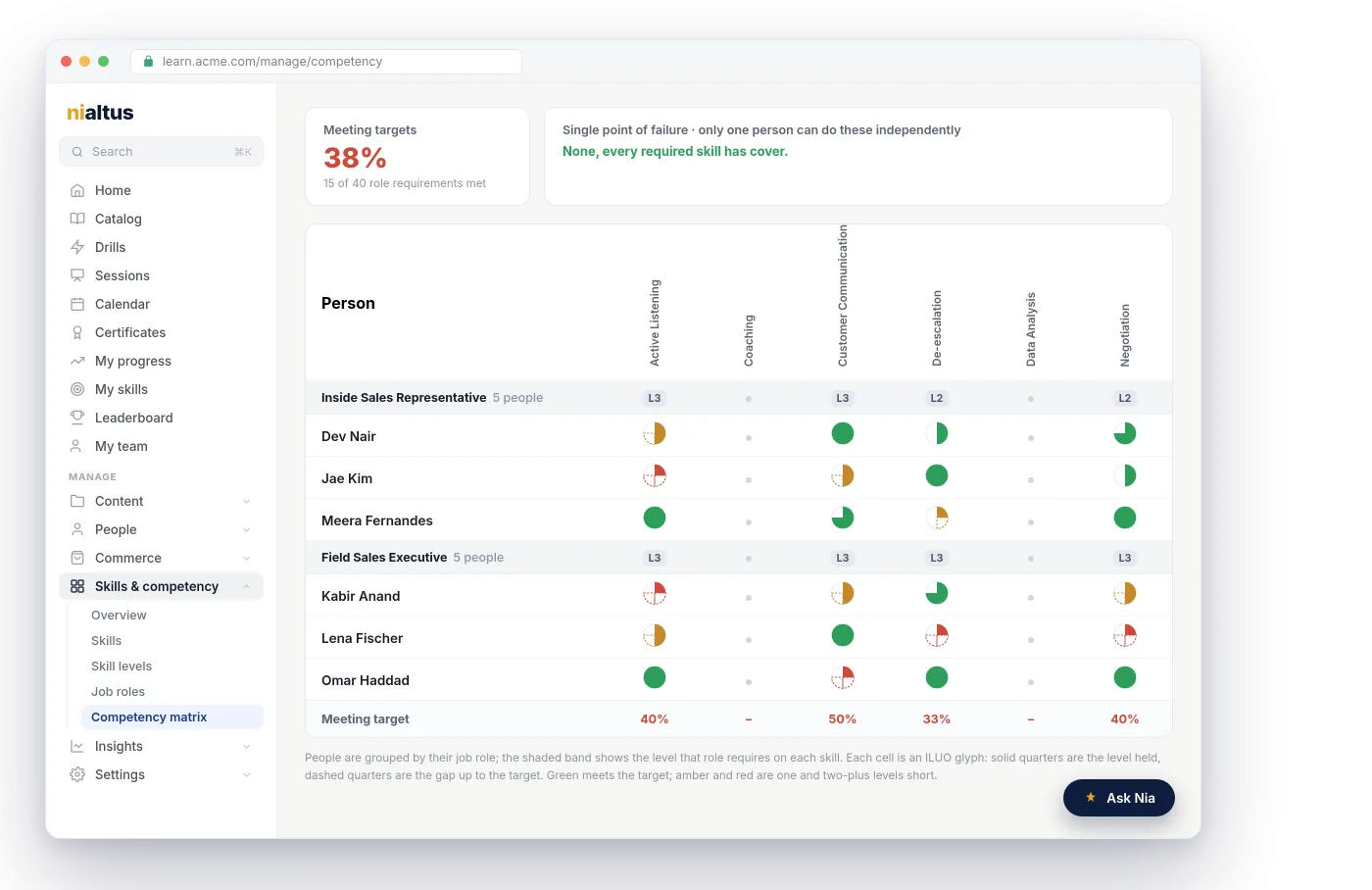
The question leadership actually asks is not how many courses were completed but whether the team can do what is needed. Nialtus answers it by mapping technical courses to a skills matrix that shows who holds which capability, at which level, across the team. You can see at a glance where technical strength is concentrated and where it is thin, which is invaluable for staffing projects, planning training, and knowing whether you have the in-house capability for what is coming next.
Keep pace with fast-changing tech
Technology moves quickly, and technical training that cannot keep up is worse than useless because it teaches the wrong thing confidently. Nialtus lets you build and update content fast, with AI drafting from your own documentation and the studio making edits quick, so training tracks the tools your team actually uses today. When a new version, framework, or process arrives, you can update the relevant courses and have your team current in days rather than waiting for a training vendor’s next release cycle.
Certify technical skill with authority
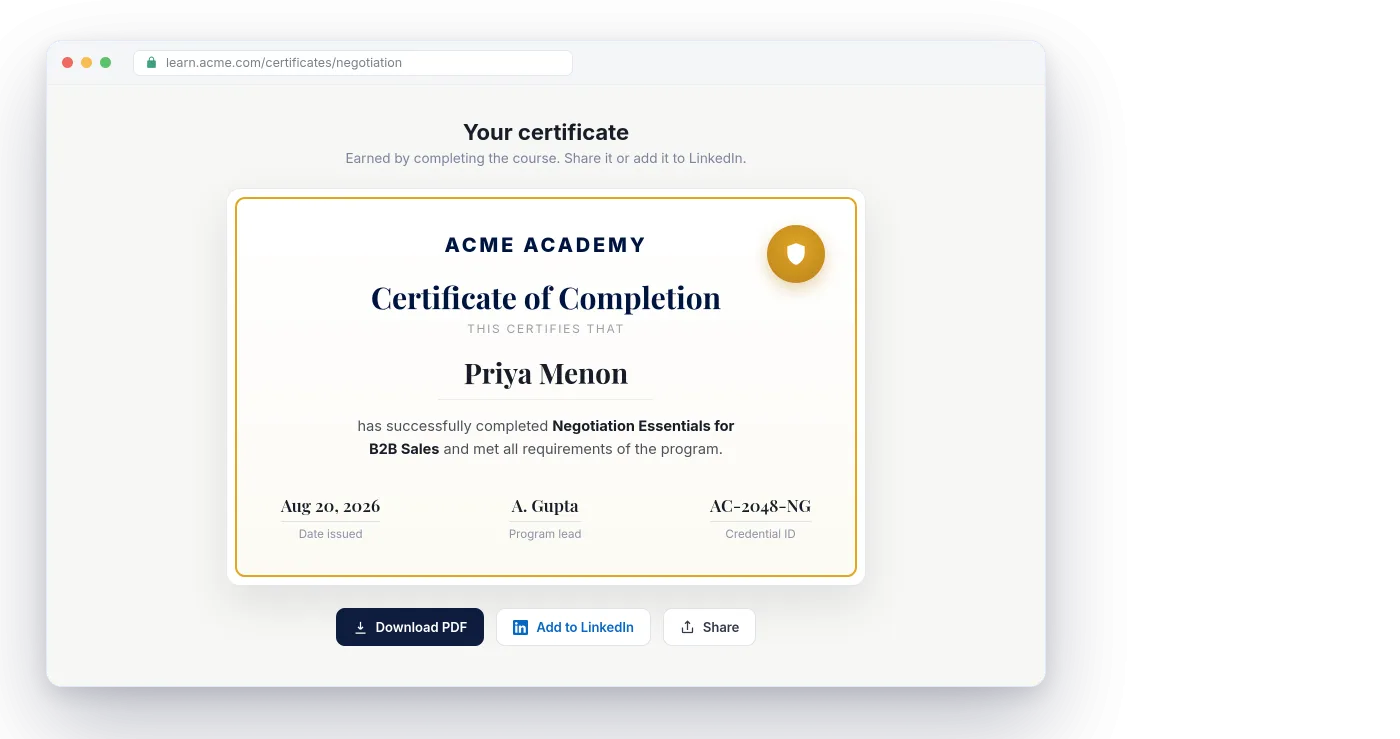
When a technical skill is proven, a verifiable certificate makes it portable and credible. End a path in a graded exam and, where the skill is practical, an observed sign-off, then issue a branded certificate that the learner can share and anyone can verify. That gives your technical certifications real weight, whether they are an internal quality bar for a role or a credential your team members can carry, and it keeps your certified population coming back for recertification as the technology evolves.
How technical training works in Nialtus
From existing content to proven, measured capability.
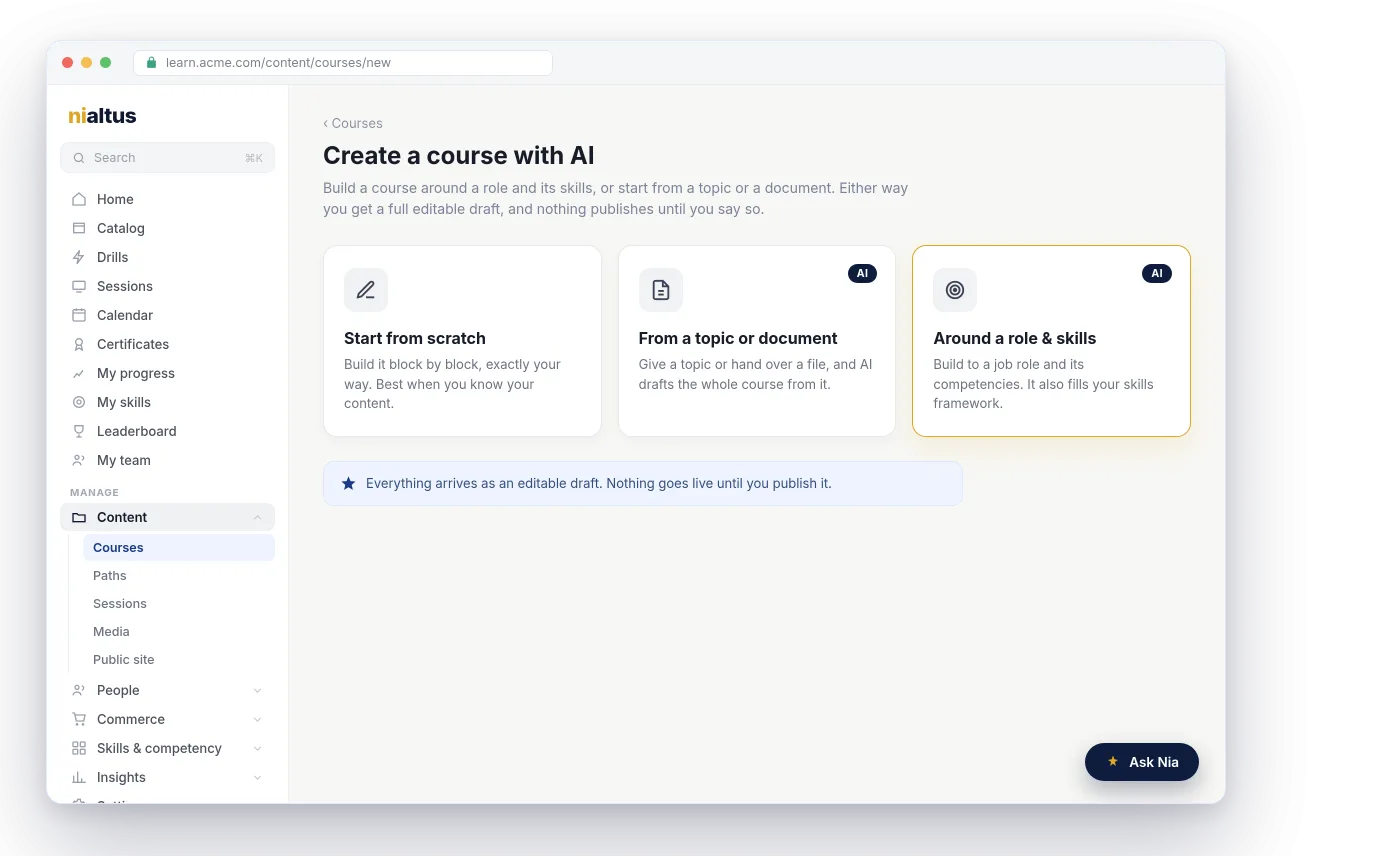
Import SCORM and xAPI, and add new lessons with the studio or AI.
Structure courses from fundamentals to advanced, with checkpoints.
An assessor observes the task against a checklist and records the result.
Map courses to a skills matrix that shows capability by person and role.
End in a graded exam and issue a verifiable certificate.
What technical training delivers
The payoff of measuring real capability.
What technical training needs
Deliver, practice, and measure.
Learning Everest has built technical and skills training for demanding, specialized teams. Nialtus delivers it and measures it, turning technical courses into capability you can see.
Technical training questions
Straight answers on how Nialtus builds and measures technical skill.