

Grow people into the roles you need next
Define the skills each role needs, show people the path to their next one, and back it with learning that closes the gap, all in a live competency view.
People leave when they cannot see a way to grow
Development is one of the biggest reasons people stay or go, yet most organizations cannot show an employee what growth actually looks like. Nialtus makes the path to the next role concrete, and backs it with the learning to get there.
A clear path to the next role
Show people how to grow, and give them the learning to do it.
Define each role’s skills
Set the skills and levels each job role needs, so a path to the next role is concrete rather than a vague conversation.
Show the gap, and the way
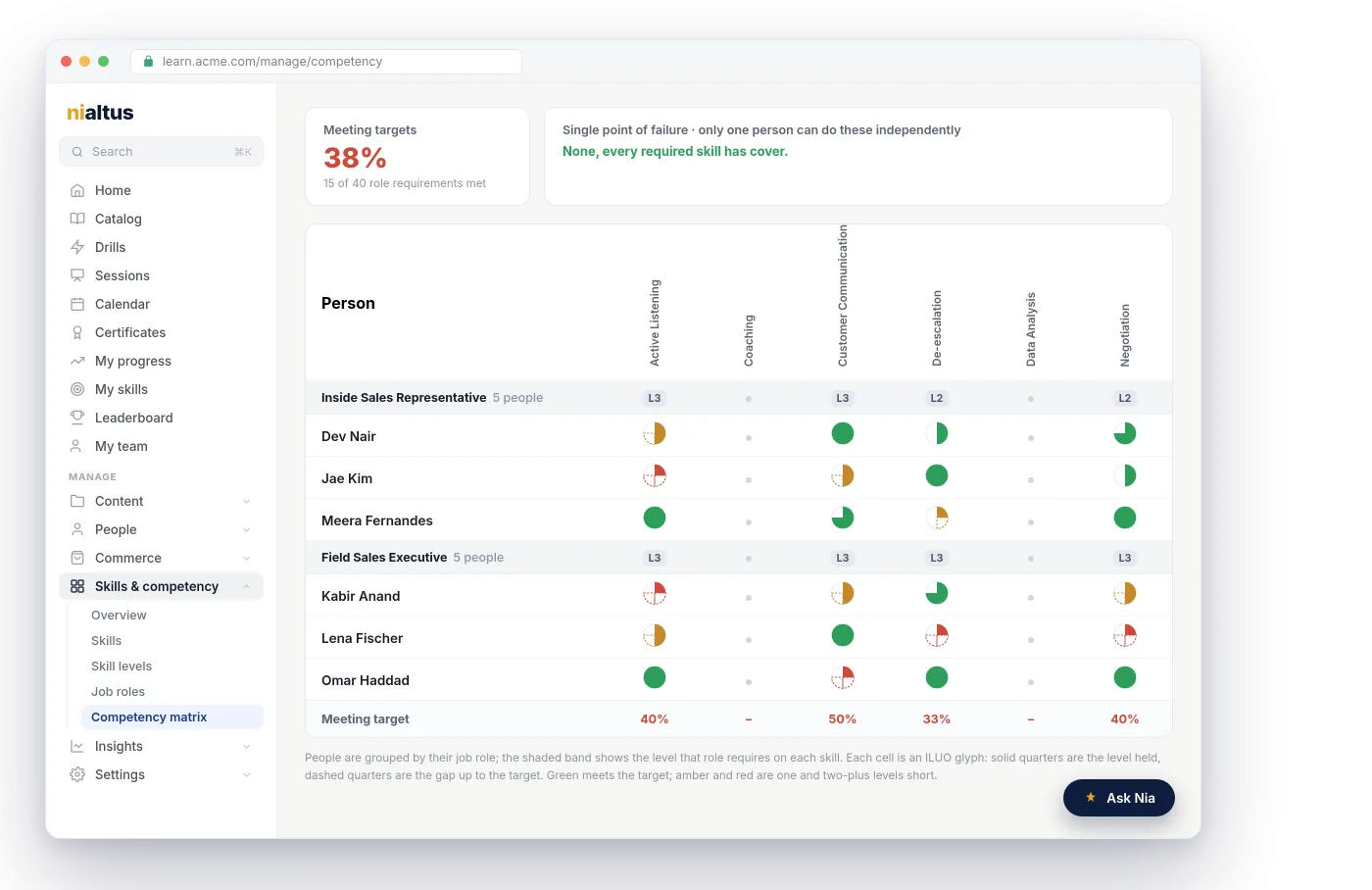
A competency matrix shows where a person stands against a target role, and which learning closes the gap.
Back it with learning
Map courses to skills, so growing into a role is a path someone can actually follow, not just aspire to.
Career growth people can see
The single most demotivating thing about development is not knowing what you are working toward. When the skills a role needs are explicit and mapped to learning, an employee can see exactly what stands between them and their next role, and start closing it deliberately. That visibility changes everything: development stops being vague encouragement from a manager once a year and becomes a concrete, motivating path the person can own and act on, which is precisely what keeps ambitious people engaged and inside your organization.
Build the bench, deliberately
A skills matrix is not only a snapshot of today; it is a map of where people can go. Because you have defined what each role requires, you can see who is close to being ready for a step up and grow them into it, rather than always reaching outside for skills you could have built. Succession stops being a scramble when a key person leaves and becomes a plan you have been quietly working toward, with a bench of people you have deliberately developed toward the roles you know you will need.
Turn a career conversation into a plan
Most career conversations end in good intentions and no follow-through, because there is nothing concrete to act on afterward. Nialtus changes that by turning the conversation into a plan: here are the skills your target role needs, here is where you are, and here are the courses that close the gap. A manager and an employee leave the conversation with a specific, trackable path rather than a vague promise, and both can see progress over the following months, which is what makes development actually happen instead of being talked about.
Define what each level really means
Career paths only work if everyone agrees what the next level actually requires. Nialtus lets you define proficiency levels for each skill, so the difference between capable and expert is a concrete standard rather than a manager’s opinion. That shared definition makes development fair and comparable across teams: two people working toward the same role are measured against the same bar, and a promotion reflects genuine readiness rather than who advocated most loudly for themselves. It is the foundation that makes the whole system credible.
See where your future capability is thin
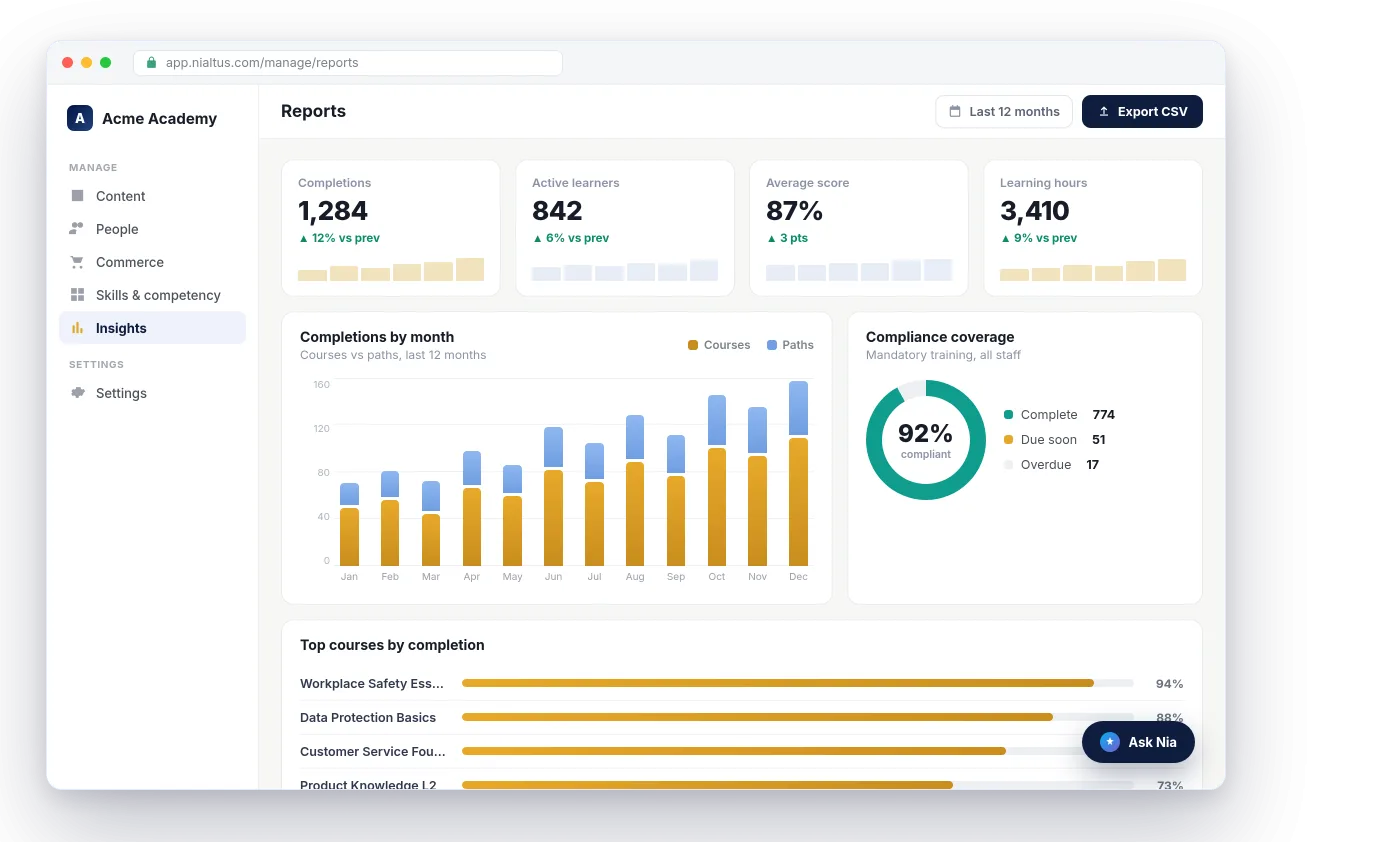
Talent development is not only about individuals; it is about making sure your whole organization has the capability it will need. Gap reporting shows where skills are thin across teams and where your future roles are under-supplied with ready people, so you can direct development where it matters most. Instead of spreading development budget evenly and hoping, you invest it where a capability gap could actually hold the business back, turning talent development into a strategic tool rather than a well-meaning perk.
Recognize progress along the way
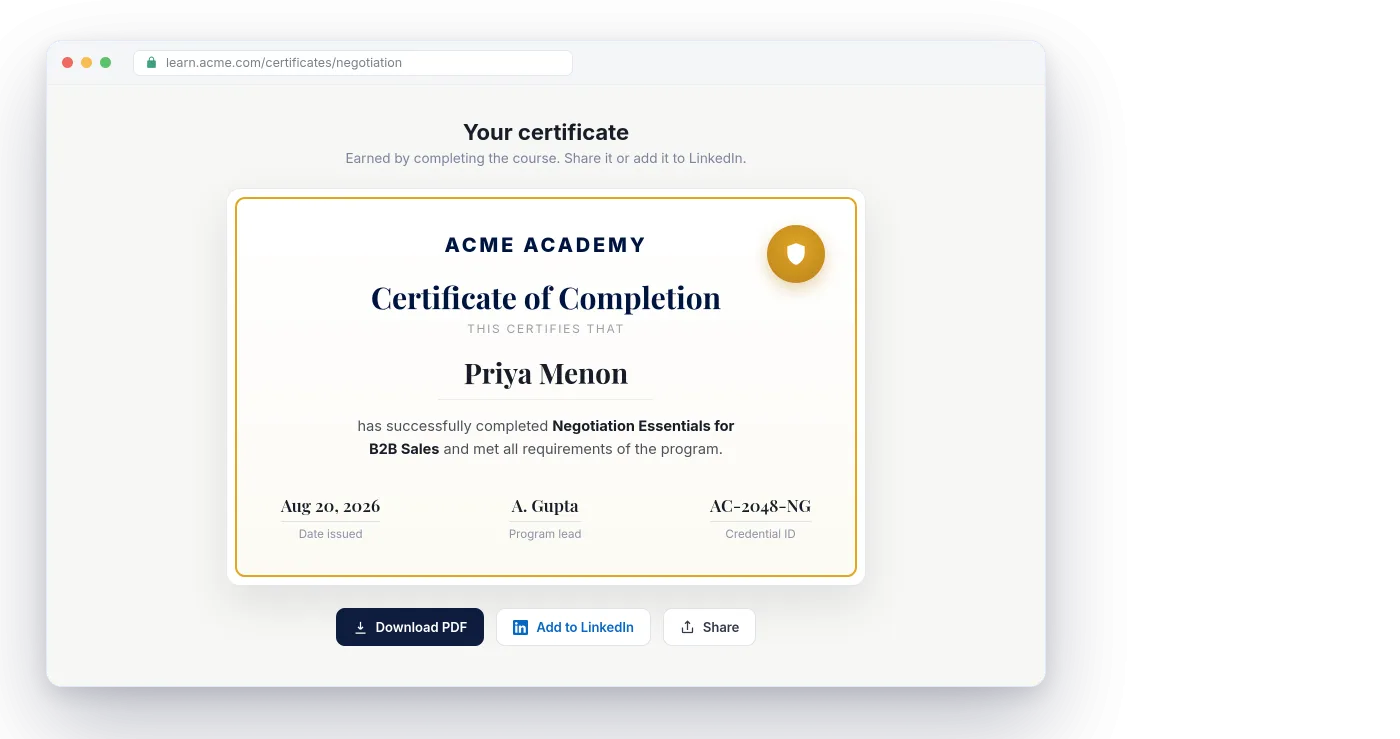
Growth is a long game, and people stay motivated when milestones are recognized. As learners complete the courses and reach the levels their development plan requires, branded, verifiable certificates mark the progress, giving people something concrete at each step rather than only at some distant promotion. That steady recognition keeps development feeling like movement rather than a treadmill, and it signals to the whole organization that growing is valued here, which is exactly the culture that makes people want to build their careers with you.
How talent development works in Nialtus
From defining roles to a deliberately built bench.
Set the skills and levels each job role needs, so growth targets are concrete.
A competency matrix shows where each person stands against a target role.
Map courses to skills so a career conversation becomes a trackable plan.
See progress toward each target over the following months.
Grow people into the roles you will need, and recognize milestones.
What talent development delivers
The payoff of growing people on purpose.
What talent development needs
Define, reveal, and close the gap.
Learning Everest helps organizations build capability, not just deliver courses. Nialtus turns that into career paths people can see and a bench you can build on purpose.
Talent development questions
Straight answers on how Nialtus supports growth and career paths.